Introduction
The dream of farm-to-table freshness often fades in urban living. For many, apartment living combined with busy careers leaves little time for traditional gardening, as soil-based methods struggle in compact spaces due to repetitive chores, forgotten watering, and lack of natural sunlight.
We are entering the era of the Smart Garden 2.0. No longer just pots on a balcony, the modern smart indoor garden is a high-tech ecosystem. By integrating indoor hydroponics and advanced automation, you can transform a tiny corner of your living room into a productive, self-sustaining food factory. This evolution aligns with the principles discussed in “Biophilic Design and Quality of Life: Cultivating Mental and Physical Well-being in Compact Spaces,” which highlights how integrating natural elements into our homes is essential for reducing stress and restoring cognitive health in modern urban environments.
Section 1: AI is Your New Gardener
The biggest barrier to thriving home gardens isn’t a lack of a green thumb—it’s a lack of data. This is where Artificial Intelligence changes the game. A modern smart indoor garden acts as a living laboratory where AI-powered sensors monitor every variable in real-time.
In 2026, systems showcased at CES have moved beyond simple timers. They now utilize “Agentic Planning,” where the system doesn’t just notify you that water is low; it calculates the exact nutrient density required to optimize the flavor and vitamins of your kale or basil. This automation means your smart indoor garden can adjust its parameters based on the specific growth stage of each plant. Whether diagnosing a rare leaf fungus via an integrated camera or balancing pH levels without your intervention, AI ensures your apartment living space remains a clean, high-yield environment with minimal effort.
Section 2: Space-Saving Tech: Vertical Towers & The Smart Indoor Garden
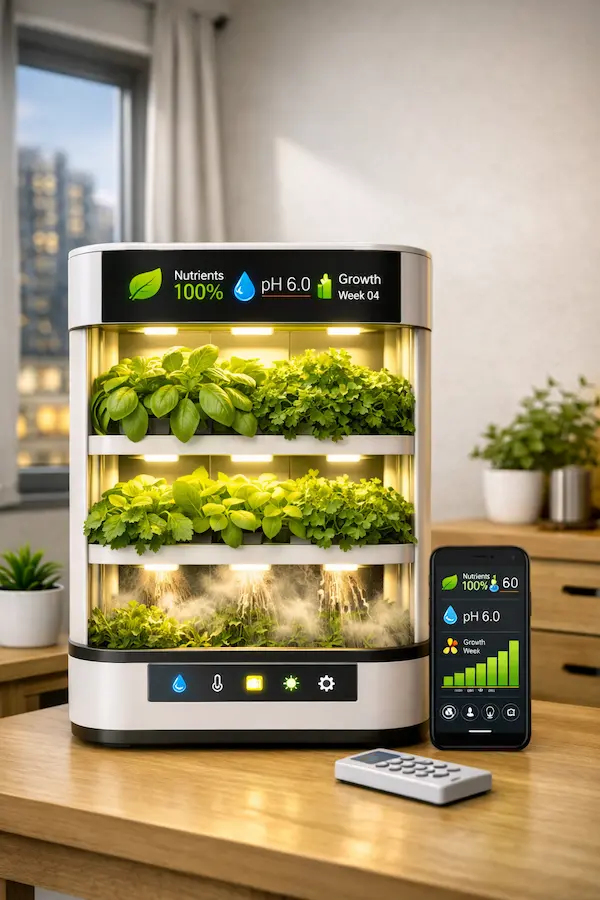
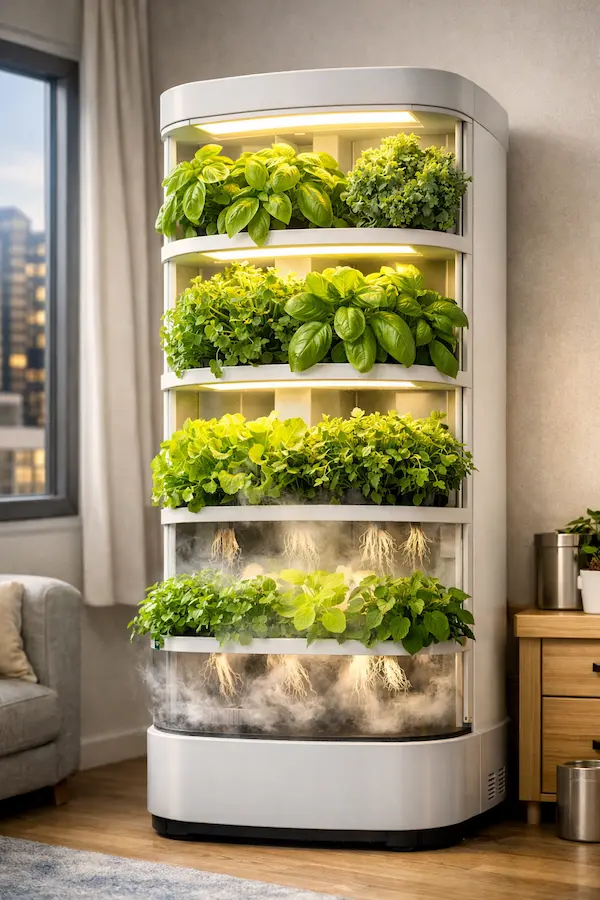
When horizontal space is limited, the only way to go is up. Vertical garden ideas have evolved from rustic wooden pallets to sophisticated vertical hydroponics towers, becoming the centerpiece of any smart indoor garden setup. These towers allow you to grow up to 30 different plants in a footprint no larger than a standard floor lamp.
The breakthrough for 2026 is Fogponics. Unlike traditional indoor hydroponics that submerge roots in water, a high-tech smart indoor garden now uses ultrasonic nebulizers to create a nutrient-rich mist. This fog delivers nutrients and oxygen directly to the roots with unparalleled efficiency. For those balancing apartment living, this tech is a lifesaver: it’s soil-free (no dirt for pets to dig up), consumes 95% less water than traditional farming, and prevents root rot common in stagnant water systems. These smart vertical garden systems turn a blank wall into a living lung for your home, purifying the air while providing a continuous harvest.
This breakthrough isn’t just science fiction; it’s rooted in decades of space research. Modern vertical systems build upon NASA-funded research on indoor farming originally designed to sustain life in space, now optimized for your kitchen. By bringing this ‘spinoff’ technology into your home, you are literally using the same principles that grow food for astronauts.
Taking the Tech Outside: These vertical breakthroughs aren’t confined to your kitchen walls. The same Fogponics and space-saving towers can be scaled for your outdoor oasis to withstand the elements while maximizing yield. Discover how to apply these vertical principles to your exterior in our guide: [Summer 2026: The Smart Balcony Retreat Every American Deserves], featuring the latest in weather-resistant smart garden towers.
Section 3: Beyond Decor: The Wellness of Smart Lighting
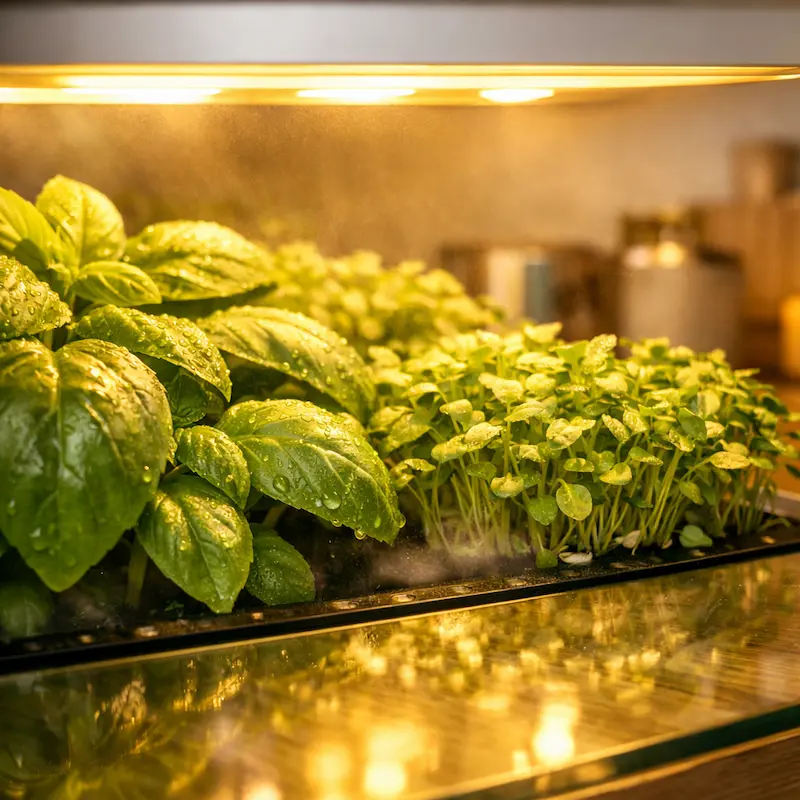
Most people view grow lights as a necessary evil, but the Smart Garden 2.0 uses light as a tool for human wellness. Modern smart indoor garden systems feature “Circadian Lighting” tech. These LED arrays don’t just provide the full spectrum of light required for photosynthesis; they sync with your biological clock.
In the morning, your garden can emit a cool blue light to boost cortisol and wake you up. As evening approaches, it transitions to a warm, sunset hue that encourages melatonin production, helping you sleep better. This is the ultimate “Beyond Decor” benefit: your garden isn’t just a food source; it’s a smart lighting solution that improves your mood and mental health. Combined with greenery, this tech-integrated nature becomes a vital sanctuary within the urban hustle.
Practical Considerations
Before investing, consider the following:
- Cost: Entry-level smart garden systems start at a few hundred dollars, while advanced fogponics towers can reach several thousand.
- Ease of Setup: Most systems are plug-and-play, requiring minimal assembly.
- Maintenance: Automated watering and nutrient systems reduce manual effort, but occasional cleaning and monitoring are still necessary.
- Space Efficiency: Vertical hydroponics and fogponics maximize yield in small apartments, making them ideal for apartment living.
- Sustainability: Smart gardens consume less water and energy, aligning with eco-friendly urban lifestyles.
Conclusion
Transitioning to a Smart Garden 2.0 is about more than convenience; it’s about reclaiming autonomy in a concrete jungle. By leveraging automation, indoor hydroponics, and Fogponics, you can enjoy a self-sustaining food factory that fits perfectly into your apartment living lifestyle. The future of the smart indoor garden is here—smarter, cleaner, and more rewarding than ever.
Ready to take your urban home to the next level? Transitioning to a smart garden is just the beginning. To discover more ways to optimize your home with cutting-edge tech, check out our full Small Space Lifestyle Guide 2026 for the latest on AI integration and modern urban comfort.