Introduction: Basic Principles of Dog Behavior in Small Spaces
The relationship between humans and dogs has evolved over thousands of years into a deeply rooted psychological partnership. Scholars in Handbook of Applied Dog Behavior and Training describe dogs as highly social companions capable of interpreting human emotions and responding to behavioral cues. This unique bond makes Apartment Dog Living not just possible—but highly successful—when guided by behavioral science and structured routines.
Modern urban life often means smaller homes, limited outdoor access, and shared walls. Yet behavioral research shows that dogs react more to consistency, leadership, and mental stimulation than to square footage. Dogs “live mainly in the here and now,” associating actions with outcomes and responding to environmental cues rather than the physical size of their living space.
By understanding these principles, pet owners can create a harmonious Apartment Dog Living environment even in compact apartments.
1. Establish Leadership in Limited Space 🧭
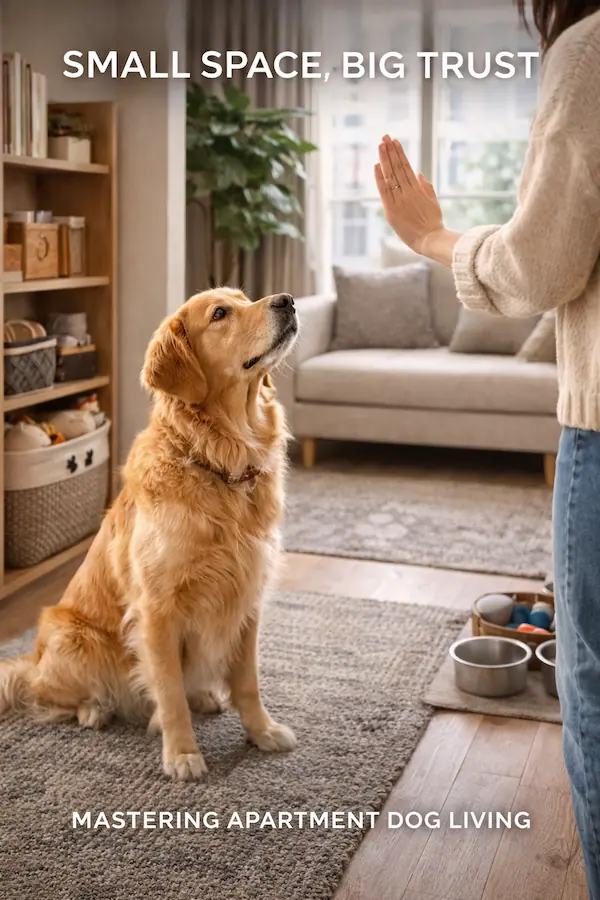
Dogs are social animals that rely on hierarchical relationships and clear rules. In small apartments, this structure becomes even more important because physical boundaries are limited. Establishing leadership without aggression builds stability and reduces anxiety-driven behaviors such as excessive barking. (see: Understanding Dog Psychology by Krasi Kanev, 2025).
Successful Apartment Dog Living depends on three foundational principles:
- Consistent rules followed daily
- Positive reinforcement for desired behaviors
- Clear communication using tone and body language
When owners provide consistent leadership, dogs feel secure and calm. Research emphasizes that trust is built gradually through predictable interactions and stable boundaries, which significantly improves shared living quality.
This consistency is especially important in apartments where unpredictable noise and shared spaces can otherwise trigger stress.
2. The “Outdoor Extension” Strategy 🌳
Even though Apartment Dog Living occurs indoors, dogs still require stimulation from the outside world. Behavioral development research highlights the importance of socialization and exposure to diverse stimuli, especially during early developmental periods.
Think of your apartment as the resting den, while parks, sidewalks, and green spaces become your dog’s extended backyard.
Practical ways to apply this strategy:
- Two daily walks for physical exercise
- Weekly visits to dog-friendly parks
- Exposure to different sounds and environments
- Short socialization sessions with people and other dogs
Regular stimulation prevents destructive behaviors often caused by boredom and lack of activity—such as chewing furniture or excessive barking.
By using outdoor environments intentionally, Apartment Dog Living becomes dynamic and enriching despite indoor constraints.

3. Master Non-Verbal Communication in Close Quarters 👀
In small apartments, humans and dogs constantly share the same space. Understanding canine body language becomes essential for successful Apartment Dog Living.
Dogs communicate using:
- Ear and tail positions
- Facial expressions
- Body posture
- Vocal signals like whining or growling
Reading these signals allows owners to respond correctly and prevent misunderstandings.
For example:
- A tucked tail may signal fear
- Raised ears indicate alertness
- Avoiding eye contact suggests discomfort
Misinterpreting these cues in tight spaces can lead to tension. Correct interpretation, however, builds trust and strengthens the bond between dog and owner.
4. Nutritional Precision for Indoor Lifestyles 🥗
Nutrition plays a critical role in Apartment Dog Living, particularly when spontaneous physical activity may be limited. A balanced diet tailored to age, breed, and activity level helps prevent obesity—a common issue among indoor dogs. Modern owners are now achieving this balance by implementing [Smart Home Dog Feeding: 3 Space-Saving Automations], which allow for micro-portioning and scheduled delivery to match a dog’s indoor energy expenditure.
Key nutritional considerations:
- Adjust portion sizes based on activity level
- Provide fresh water at all times
- Avoid harmful foods like chocolate, onions, and grapes
- Monitor weight regularly
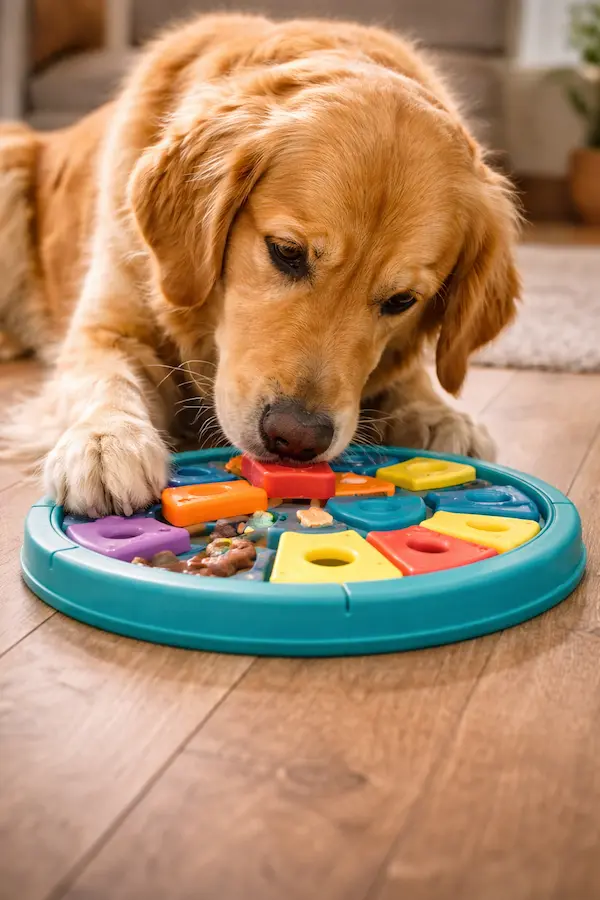
Mental health is equally important. Research stresses that mental stimulation through toys, training, and interaction helps maintain well-being and prevents behavioral problems.
Interactive puzzle toys, short training sessions, and scent games can transform a small apartment into a stimulating environment. (see: Understanding Dog Psychology by Krasi Kanev, 2025).
5. Motivation Through Play and Positive Reinforcement 🎾
One of the most effective tools for successful Apartment Dog Living is positive reinforcement. Dogs learn best when desired behaviors are rewarded with treats, praise, or play.
This method:
- Encourages calm indoor behavior
- Reduces destructive habits
- Builds trust between owner and dog
Short indoor games like:
- Hide-and-seek with treats
- Clicker training sessions
- Tug toys or soft fetch
help maintain motivation and prevent boredom.
Positive reinforcement transforms a small apartment into a learning environment rather than a place of confinement.
Conclusion: Quality Over Square Footage 🏠🐾
Ultimately, Apartment Dog Living is not about how large your home is—it’s about how well you meet your dog’s psychological and physical needs. Dogs respond to routine, leadership, stimulation, and emotional connection more than they respond to space.
By applying:
- Consistent leadership
- Outdoor extension strategies
- Clear non-verbal communication
- Proper nutrition
- Positive reinforcement
you can create a balanced and fulfilling life for your dog—even in the smallest apartment.
The human–dog partnership has thrived for thousands of years, adapting to changing environments. With thoughtful planning and behavioral insight, Apartment Dog Living becomes not just manageable—but deeply rewarding. 🐕✨
Ultimately, quality of life depends on meeting your dog’s psychological needs rather than the size of your floor plan. Ready to optimize the rest of your home? Read our full guide on [Mastering the Small Space Lifestyle] to discover how AI tech and modern comfort work together in 2026.🐕✨