Introduction
In the modern landscape of urban living, where studio apartments and compact homes are becoming the norm, pet owners face a dual challenge: maintaining a rigorous health regimen for their pets while managing limited square footage. Smart home dog feeding has emerged not merely as a convenience but as a technical solution to these spatial and nutritional dilemmas. By leveraging the latest in IoT (Internet of Things) and microcontroller-based automation, homeowners can now ensure their pets are nourished precisely and hygienically without sacrificing valuable living space.
As part of our comprehensive guide on the [Best Smart Home Devices for Small Spaces 2026], we are diving deep into how automation can transform pet care in compact apartments. If you are navigating the unique challenges of raising a furry friend in an urban setting, you might also find our guide on [Apartment Dog Living: 5 Smart Solutions for Small Spaces] essential for creating a balanced environment.
The Science of Precision: Why Smart Home Dog Feeding Matters
As highlighted in recent academic studies (e.g., IJASER 2024), malnutrition and obesity in domestic pets often stem from irregular feeding schedules and “free-feeding” habits, which is why focusing on [healthy nutrition for dogs] is crucial before automating their environment. Smart home dog feeding systems address this by utilizing Real-Time Clocks (RTC) and automated dispensers to provide portion-controlled meals. For the resident of a small apartment, this automation replaces bulky open bags of food and multiple messy bowls with a single, sleek, and programmed unit.
1. Wall-Mounted Automations: Reclaiming the Floor
One of the most effective strategies in smart home dog feeding for small spaces is the transition from floor-based bowls to wall-mounted dispensers.
- Spatial Efficiency: By elevating the feeding station, you clear the “footprint” of the kitchen or hallway, making the room feel larger and reducing tripping hazards.
- Hygienic Precision: These units often utilize the technology discussed in the IJERTV11 research—incorporating load cell sensors to measure the exact weight of food dispensed. This prevents overflow and the subsequent pest issues often found in cramped quarters.
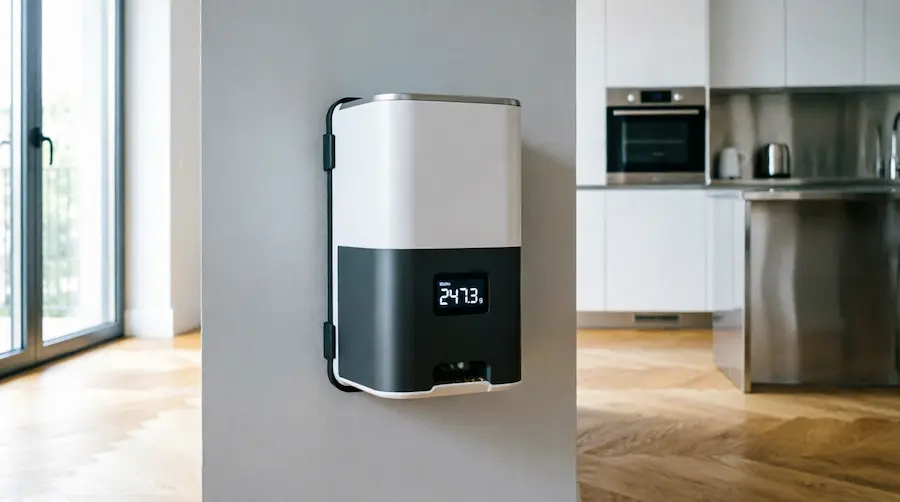
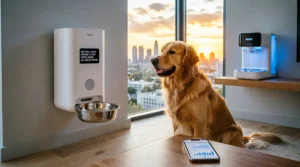
Smart home dog feeding systems like this wall-mounted unit use load cell sensors to provide precise meal portions while keeping your floor space clear and uncluttered.2. UV-C Filtered Water Fountains: Compact Purity
Water management is a critical component of smart home dog feeding. Traditional water bowls require frequent refills and occupy counter or floor space. Modern, compact fountains integrated with UV-C (Ultraviolet-C) sterilization allow for:
- Extended Freshness: The UV-C light kills 99.9% of bacteria and bio-films, meaning water stays potable for weeks.
- Reduced Footprint: Because the water is constantly recycled and purified, the reservoir can be smaller and more vertical, fitting perfectly into tight corners or even on a sturdy shelf.
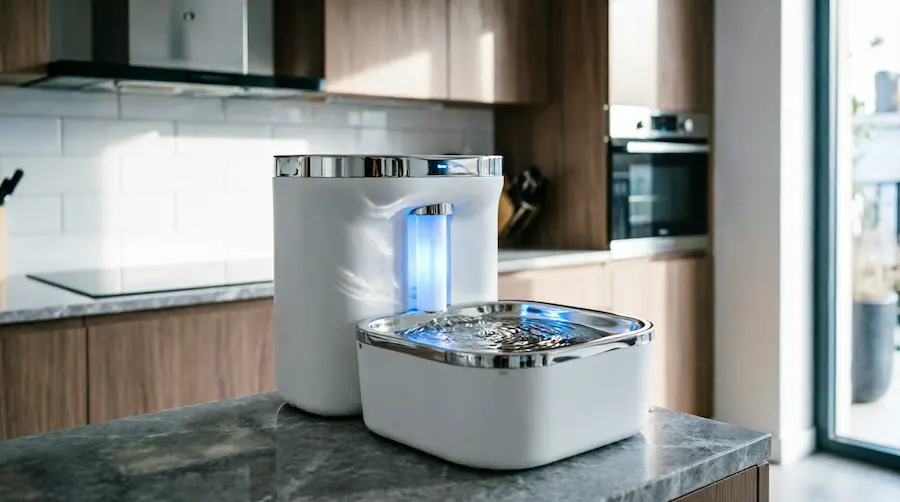
Compact UV-C fountains are a game-changer for smart home dog feeding, ensuring extended water freshness and purity while occupying a minimal footprint in small apartments.3. IoT-Integrated Slow Feeders: Health in Small Portions
For dogs living in confined spaces, physical activity may be limited, making weight management vital. Smart home dog feeding systems now include “Slow Feed” modes. Based on the microcontroller logic found in the IJRPR 2024 documentation, these devices dispense food in tiny increments over 15–30 minutes.
- Digestive Benefits: This prevents “bloat” and ensures the dog feels full with less food.
- Smart Scheduling: Using 5G or Wi-Fi connectivity, owners can adjust these portions dynamically based on the dog’s activity level for that day, all via a smartphone app.
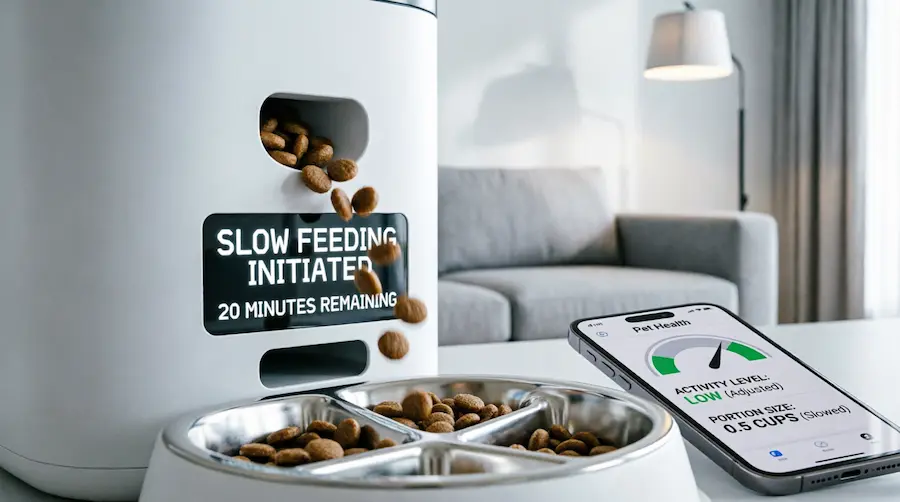
Smart home dog feeding technology now includes IoT-integrated slow feeders that use microcontroller logic to prevent bloating and manage weight through dynamic, app-controlled scheduling.The Technical Backbone: Sensors and Connectivity
The reliability of smart home dog feeding rests on the hardware. As the provided PDF on microcontroller-based systems suggests, the use of Arduino-controlled servo motors ensures that the dispensing mechanism does not jam—a frequent failure in cheaper, non-smart models. Furthermore, the integration of battery backups ensures that even in the event of a power outage in your smart apartment, your dog’s nutritional needs are met without interruption.
Conclusion: A Smarter Way to Care
Embracing smart home dog feeding represents the pinnacle of responsible pet ownership in 2026. By utilizing space-saving automations like wall-mounted units and UV-C fountains, and backing them with the precision of load-sensor technology, you transform your home into a high-efficiency environment. Your dog receives the exact nutrition required for a healthy life, and you reclaim the space and peace of mind necessary for a modern lifestyle.
Featured Products for Your Smart Home
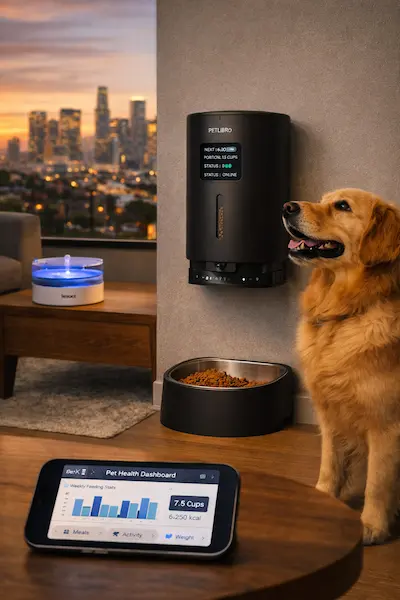
1. PETLIBRO Automatic Dog Feeder with Camera
Highlights: 1080P HD Video with Night Vision, 5G Wi-Fi, and 2-Way Audio.
Best For: Owners who want to interact with their pets remotely while ensuring precise portion control through a high-tech stainless steel slow food tray.
Rating: 4.4/5 Stars.
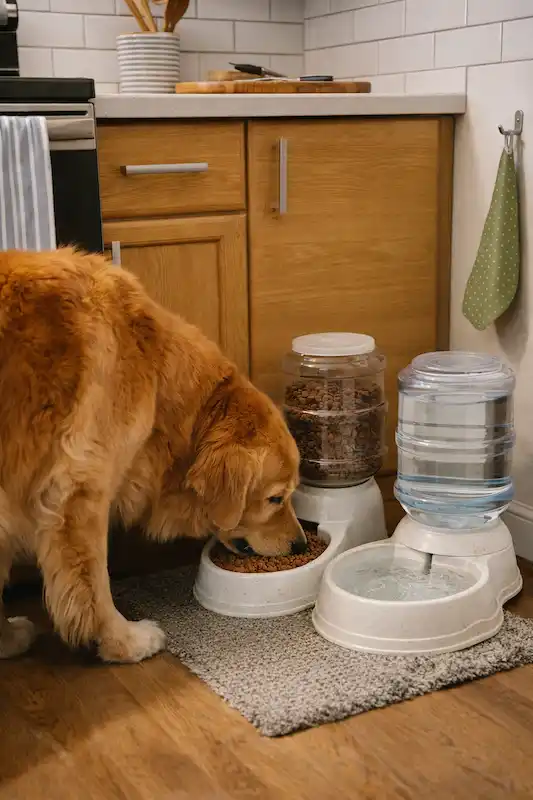
2. Amazon Basics Automatic Pet Waterer and Food Feeder Set
Highlights: Gravity-based system, 6-Pound food capacity, 1-Gallon waterer.
Best For: A reliable, cost-effective entry into smart home dog feeding. It is a “#1 Best Seller” specifically designed for easy cleaning and space efficiency in small households.
Rating: 4.5/5 Stars.
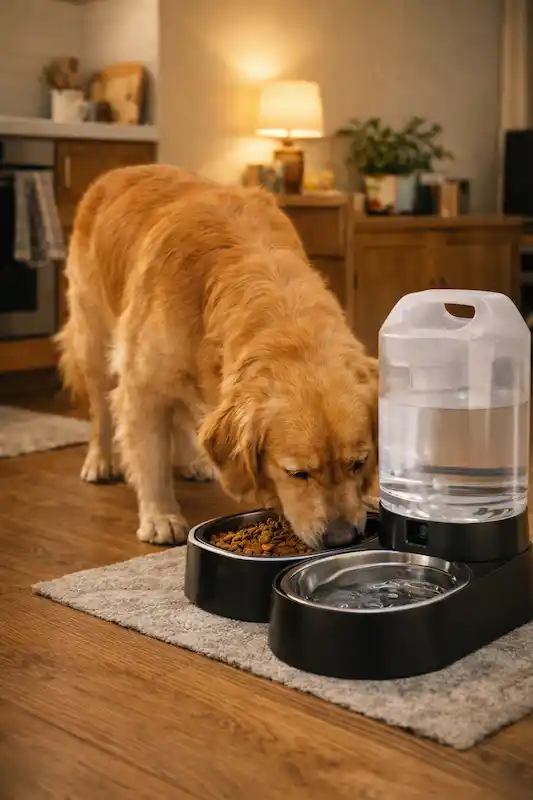
3. lesotc Automatic Dog Water Bowl Dispenser (2.4 Gallon)
Highlights: Gravity Pet Water Dispenser with 304 Stainless Steel Bowl, Easy-Carry Handle.
Best For: Multi-pet homes requiring a large-capacity but space-efficient solution. The stainless-steel construction ensures durability and hygiene.
Rating: 4.6/5 Stars.