🌿 Introduction to Engineering the Airscape
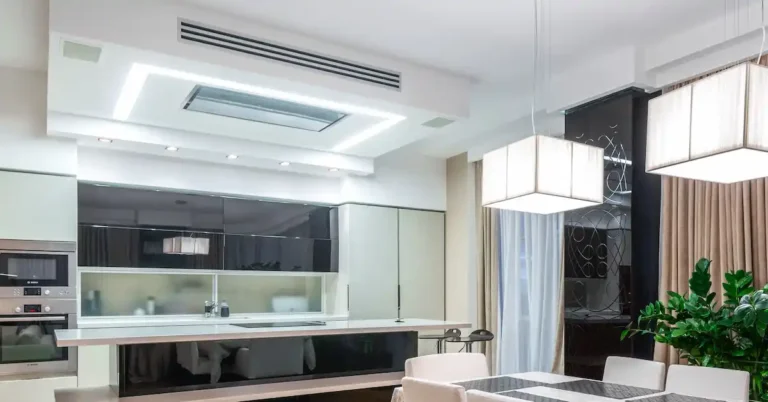
Engineering the Airscape represents a modern approach to designing indoor environments where air becomes an active element of comfort, health, sustainability, and ultimately Quality of Life. In compact spaces—such as small apartments, offices, and classrooms—the challenge lies in maintaining effective Ventilation and Indoor Air Quality despite limited volume and high occupancy. The concept integrates architectural design, environmental engineering, and human well‑being, treating air not as a passive medium but as a dynamic resource that can be shaped and optimized.
Studies from the EPA Guide to Air Cleaners in the Home and CED Engineering’s Analysis of Indoor Air Quality emphasize that indoor air often contains higher concentrations of pollutants than outdoor air. These pollutants—ranging from CO₂ and VOCs to particulate matter and biological contaminants—accumulate rapidly in confined areas. Effective ventilation dilutes these pollutants, while filtration removes them from circulation, creating a balanced and breathable environment.
The goal of Engineering the Airscape is to harmonize airflow, temperature, humidity, and filtration within the spatial and energy constraints of compact architecture. Smart ventilation systems, equipped with sensors and adaptive controls, ensure that air exchange responds to real‑time conditions. This synergy between technology and design transforms small interiors into restorative spaces that support cognitive performance, comfort, and long‑term health.
Ultimately, Engineering the Airscape redefines how we perceive air in built environments—shifting from reactive ventilation to proactive air design. By integrating sustainable practices and intelligent systems, engineers and architects can create compact spaces that embody the future of healthy living through optimized Ventilation and Indoor Air Quality.
🌿 Sources of Indoor Pollutants
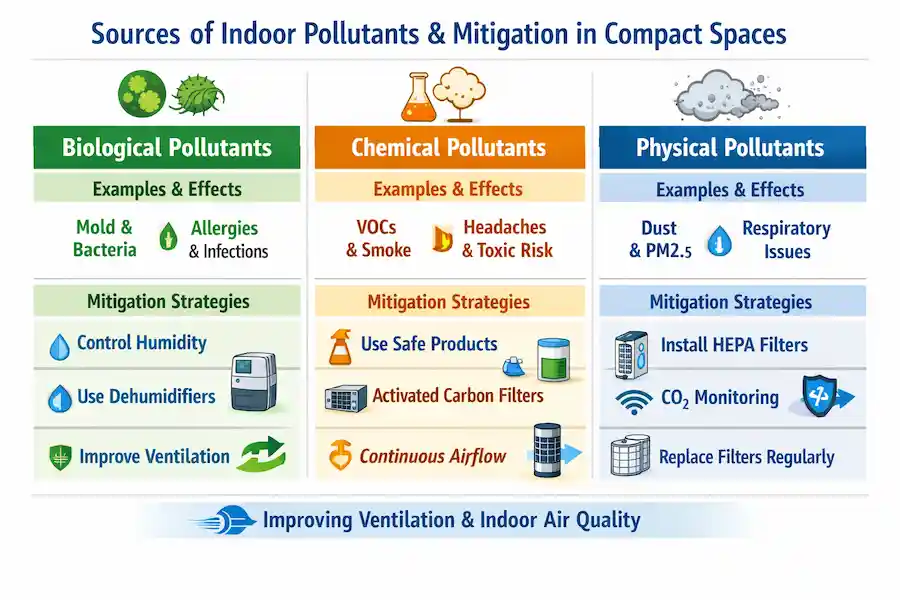
Improving Ventilation and Indoor Air Quality in compact spaces requires a clear understanding of the pollutants that accumulate indoors. Research shows that people spend nearly 90% of their time inside buildings, making indoor exposure a critical health concern. Pollutants originate from biological, chemical, and physical sources, and their impact is magnified in small, poorly ventilated environments.
Biological pollutants such as mold, bacteria, viruses, dust mites, and pet dander thrive in damp or inadequately ventilated areas. Mold spores, for example, can trigger asthma and allergies, while viruses spread more easily in confined spaces with limited airflow. Effective ventilation and moisture control are essential to reduce these risks.
Chemical pollutants include volatile organic compounds (VOCs) from paints, cleaning products, and furnishings, as well as tobacco smoke and radon gas. VOCs like formaldehyde and benzene can cause irritation and long-term health effects, while radon is a leading cause of lung cancer. The EPA emphasizes that source control and air filtration are critical strategies for mitigating these hazards.
Physical pollutants such as particulate matter (PM2.5 and PM10) and elevated CO2 levels are also common indoors. PM2.5 particles from cooking or outdoor infiltration penetrate deep into the lungs, contributing to cardiovascular and respiratory diseases. Elevated CO2, often linked to poor ventilation, reduces cognitive performance and comfort.
To address these challenges, the EPA recommends combining ventilation strategies with air cleaners and HVAC filters. Portable HEPA air cleaners and HVAC filters rated MERV 13 or higher can significantly reduce particle and gas concentrations. However, filtration must complement ventilation, not replace it.
🌬️ Ventilation Strategies in Compact Spaces
Creating healthy environments in small interiors depends on effective Ventilation and Indoor Air Quality strategies that balance airflow, pollutant removal, and energy efficiency. Compact spaces often trap pollutants such as CO₂, VOCs, and particulate matter more quickly due to limited openings and higher occupant density. Studies from EPA and IAQ handbooks emphasize that ventilation, combined with filtration, is the foundation of sustainable indoor comfort.
Natural ventilation remains one of the simplest methods, achieved through cross-ventilation or short bursts of fresh air exchange. Even in small apartments, opening windows periodically can dilute pollutants and improve Ventilation and Indoor Air Quality. Mechanical ventilation systems, particularly HVAC units equipped with MERV 13 or higher filters, provide continuous airflow and remove fine particles like PM2.5. The EPA highlights that upgrading filters enhances pollutant removal, but filtration must complement—not replace—ventilation.
Demand-controlled ventilation, using CO₂ sensors, adjusts airflow dynamically to maintain IAQ while conserving energy. European standards such as EN16798 recommend CO₂ thresholds as reliable indicators of ventilation adequacy. In addition, portable air cleaners with HEPA and activated carbon filters are effective supplements in compact rooms, targeting both particles and gases. EPA guidance stresses that these devices are most efficient when used alongside proper ventilation.
Finally, smart and sustainable systems integrate IoT sensors and automated window controls to monitor pollutant levels in real time. This adaptive approach ensures compact spaces remain healthy without excessive energy consumption. By combining natural airflow, mechanical systems, demand-controlled ventilation, and portable air cleaners, occupants can achieve balanced Ventilation and Indoor Air Quality that supports health, productivity, and long-term well-being.
🌀 Role of Air Cleaners and Filters
In compact spaces, maintaining healthy Ventilation and Indoor Air Quality requires more than airflow alone. Pollutants such as particulate matter, VOCs, and biological contaminants accumulate quickly, and while ventilation dilutes them, filtration is essential to remove them from circulation. The EPA Guide to Air Cleaners in the Home emphasizes that air cleaners and filters act as a critical supplement to source control and ventilation, ensuring that indoor environments remain safe and comfortable.
Portable air cleaners, often equipped with HEPA filters, are designed to capture fine particles like PM2.5, pollen, and dust. Activated carbon filters target gases and odors, including VOCs from cleaning products or furnishings. These devices are particularly effective in small rooms where natural ventilation is limited, directly improving Ventilation and Indoor Air Quality. However, EPA guidance stresses that no air cleaner can eliminate all pollutants, and they must be paired with proper ventilation practices.
Central HVAC systems also play a vital role. Upgrading furnace or HVAC filters to at least MERV 13 significantly enhances the removal of fine particles. According to IAQ handbooks, filters with higher ratings can capture smaller pollutants, but compatibility with system fans must be considered. Regular replacement is crucial, as overloaded filters lose efficiency and compromise both airflow and IAQ.
Ultimately, the role of air cleaners and filters is to complement ventilation strategies. By combining portable air cleaners, upgraded HVAC filters, and consistent airflow management, compact spaces can achieve balanced Ventilation and Indoor Air Quality. This integrated approach reduces exposure to harmful pollutants, supports occupant health, and enhances overall comfort and productivity.
🌱 CO2 as an Indicator of IAQ
Carbon dioxide (CO₂) has long been recognized as a reliable indicator of Ventilation and Indoor Air Quality in enclosed spaces. Because people are the dominant source of CO₂ indoors, its concentration directly reflects the adequacy of ventilation. When ventilation is insufficient, CO₂ levels rise, signaling that pollutants and bio-effluents are not being diluted effectively. According to the RoomVent 2020 study, CO₂ is widely used in demand-controlled ventilation systems, where sensors adjust airflow based on real-time concentrations to maintain comfort and safety.
Standards such as EN16798-1 and TR16798-2 establish categories of indoor air quality using CO₂ thresholds. For example, concentrations around 550 ppm are associated with high-quality environments, while levels exceeding 1350 ppm indicate poor IAQ. These thresholds help engineers design ventilation rates that balance occupant density, building emissions, and energy efficiency. However, research also shows that elevated CO₂ itself may impair cognitive performance, even when other pollutants are controlled. This underscores the importance of monitoring CO₂ not only as a proxy for ventilation but also as a direct factor influencing well-being.
The EPA Guide to Air Cleaners and Filters in the Home emphasizes that while filtration can reduce particles and gases, it does not lower CO₂. Only effective ventilation—natural or mechanical—can manage CO₂ concentrations. In compact spaces, combining portable air cleaners with proper airflow ensures that particulate matter and VOCs are reduced, while ventilation maintains safe CO₂ levels.
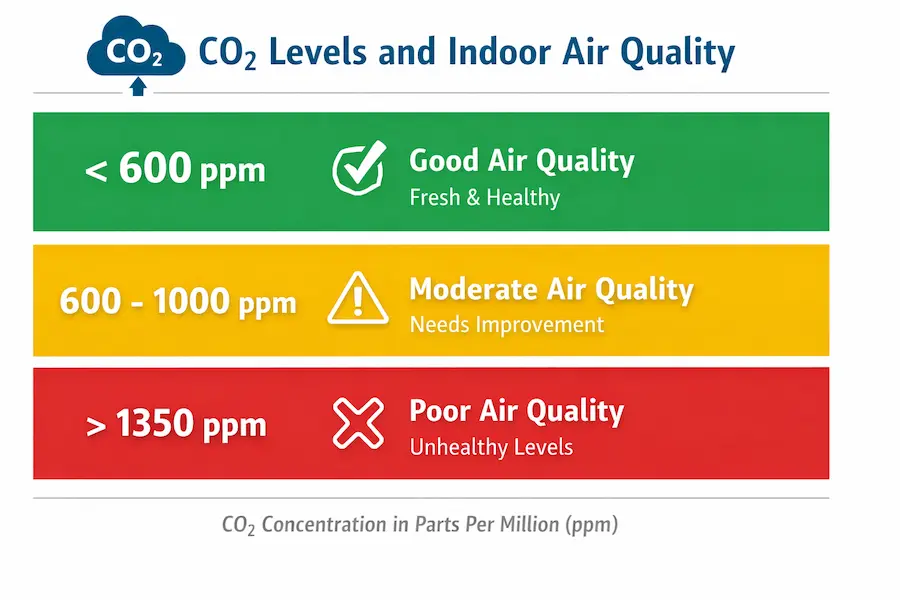
CO2 as an Indicator of IAQ: Monitoring CO2 levels is a fundamental metric for evaluating the effectiveness of Ventilation and Indoor Air Quality in compact environments.
💚 Health and Well‑being Impacts
Indoor environments profoundly influence physical and mental health, making Ventilation and Indoor Air Quality essential components of human well‑being. Studies from the EPA Guide to Air Cleaners in the Home and multiple IAQ handbooks show that poor air quality contributes to respiratory illnesses, fatigue, and reduced cognitive performance. In compact spaces, limited airflow and high occupant density intensify exposure to pollutants such as CO₂, VOCs, and particulate matter, directly affecting comfort and productivity.
When ventilation is inadequate, CO₂ concentrations rise, leading to drowsiness and impaired decision‑making. Fine particles (PM2.5) and VOCs from cleaning products or furnishings can trigger asthma, allergies, and cardiovascular stress. Biological contaminants like mold and bacteria thrive in humid, stagnant air, increasing the risk of infections and allergic reactions. The EPA emphasizes that improving Ventilation and Indoor Air Quality through consistent airflow and filtration reduces these health burdens and enhances overall vitality.
Beyond physical health, air quality also shapes psychological well‑being. Fresh, well‑ventilated spaces promote alertness, mood stability, and mental clarity. Conversely, stale or polluted air can cause irritability, headaches, and decreased focus. Integrating portable HEPA air cleaners and HVAC filters (MERV 13 or higher) with proper ventilation ensures cleaner air and supports both physiological and emotional balance.
Ultimately, maintaining optimal Ventilation and Indoor Air Quality in compact spaces is not merely a technical goal—it is a human‑centered priority. By combining ventilation, filtration, and humidity control, designers and occupants can create restorative environments that nurture health, comfort, and long‑term well‑being.
🌿 Sustainable Practices and Smart Ventilation
Modern approaches to Ventilation and Indoor Air Quality increasingly emphasize sustainability and intelligent control. Compact spaces, where airflow is limited and energy use must be optimized, benefit most from systems that combine environmental responsibility with technological precision. Sustainable ventilation practices aim to reduce energy consumption while maintaining healthy air conditions, aligning with EPA and IAQ guidelines that prioritize both occupant well‑being and ecological efficiency.
Smart ventilation systems integrate sensors, automation, and data analytics to monitor pollutants such as CO₂, VOCs, and humidity in real time. IoT‑based solutions—like those described in recent IAQ research—use microcontrollers and cloud platforms to adjust airflow dynamically, ensuring that ventilation responds to actual indoor conditions rather than fixed schedules. This adaptive control improves Ventilation and Indoor Air Quality by maintaining pollutant levels below thresholds while minimizing unnecessary energy use.
Sustainable design also involves using energy‑efficient fans, heat recovery ventilators (HRVs), and demand‑controlled ventilation (DCV). HRVs recycle thermal energy from exhaust air, reducing heating and cooling loads, while DCV systems regulate airflow based on occupancy and CO₂ concentration. The EPA underscores that combining ventilation with high‑efficiency filtration—such as HEPA or MERV 13 filters—creates a balanced approach that supports both health and sustainability.
Ultimately, smart and sustainable ventilation transforms compact spaces into responsive ecosystems. By merging automation, renewable energy integration, and efficient filtration, designers and occupants can achieve optimal Ventilation and Indoor Air Quality that protects health, conserves resources, and advances the broader goal of sustainable living.
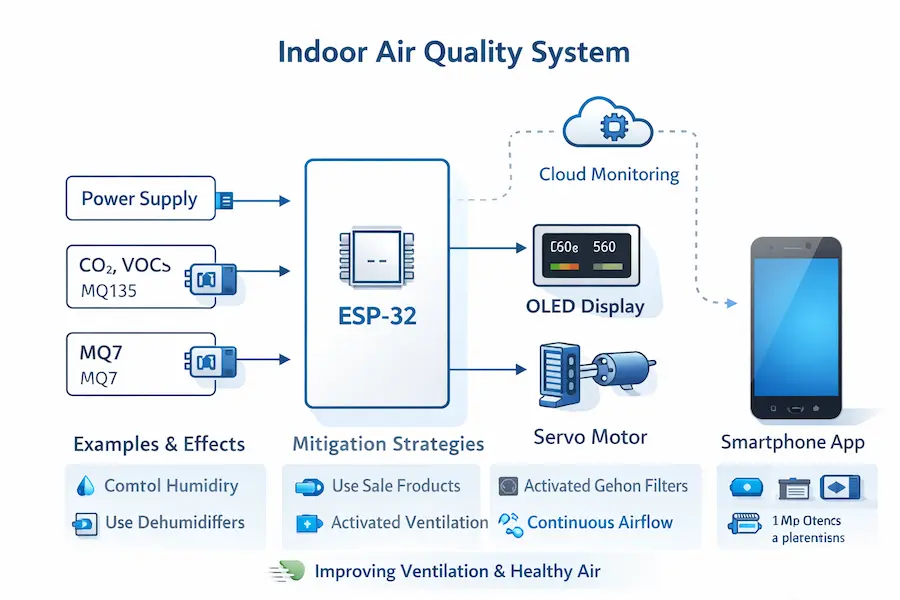
Sustainable Practices and Smart Ventilation: Integrating IoT-based monitoring with eco-friendly strategies to ensure consistent Ventilation and Indoor Air Quality without excessive energy consumption.
🏙️ Case Studies in Compact Spaces
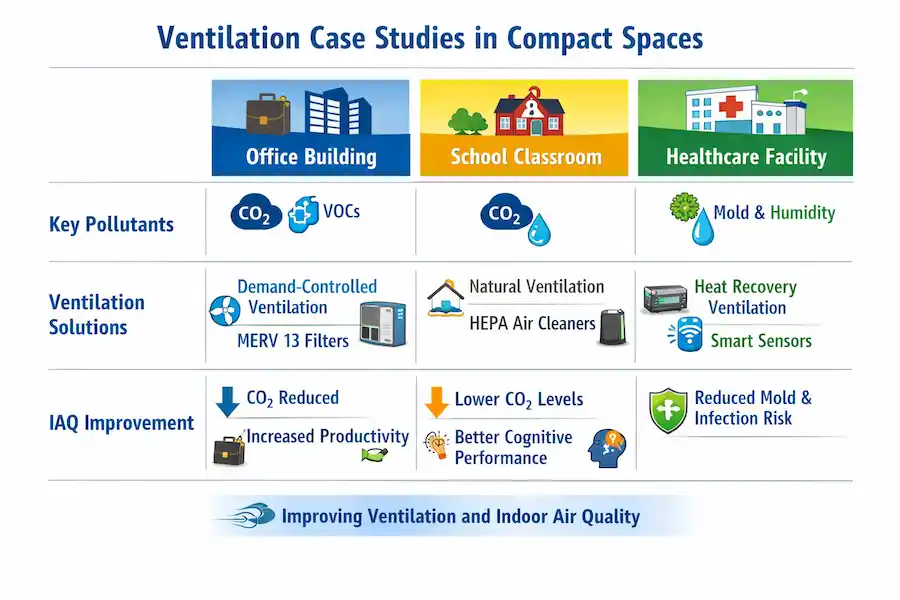
Real‑world examples demonstrate how effective Ventilation and Indoor Air Quality strategies transform compact environments into healthy, sustainable spaces. Each case highlights the integration of ventilation, filtration, and smart monitoring to overcome spatial and energy constraints.
In a commercial office building analyzed in CED Engineering’s IAQ course, poor ventilation led to elevated CO₂ and VOC levels, causing fatigue and reduced productivity. Engineers implemented demand‑controlled ventilation and upgraded HVAC filters to MERV 13, reducing CO₂ concentrations below 800 ppm and improving occupant comfort.
A school building study from RoomVent 2020 revealed that classrooms with limited airflow reached CO₂ levels above 1500 ppm during peak hours. Introducing cross‑ventilation and portable HEPA air cleaners lowered pollutant levels and enhanced cognitive performance among students. The results confirmed that combining natural ventilation with filtration is vital for maintaining safe IAQ in dense learning environments.
In a healthcare facility, IAQ monitoring identified high humidity and biological contaminants in patient areas. Installing heat‑recovery ventilators (HRVs) and smart sensors allowed real‑time control of airflow and humidity, reducing mold growth and infection risks.
These case studies prove that even in small or high‑occupancy spaces, integrating ventilation, filtration, and smart control systems ensures balanced Ventilation and Indoor Air Quality. The outcomes—lower pollutant concentrations, improved comfort, and enhanced well‑being—illustrate how engineering precision and sustainable design can redefine air quality in compact environments.
🧩 Conclusion and Future Directions
The exploration of Ventilation and Indoor Air Quality in compact spaces reveals that air management is not merely a technical necessity but a cornerstone of human health, comfort, and sustainability. Across all sections—from pollutant identification to smart ventilation—evidence consistently shows that effective airflow, filtration, and monitoring systems are vital for maintaining safe and productive indoor environments. Compact spaces, in particular, demand precision: limited volume amplifies pollutant concentration, making ventilation and filtration inseparable components of design.
Future directions in Ventilation and Indoor Air Quality research emphasize integration and intelligence. Smart sensors, IoT‑based control systems, and adaptive ventilation models will continue to evolve, enabling real‑time responses to changes in occupancy and pollutant levels. Sustainable practices such as heat recovery ventilation (HRV), demand‑controlled ventilation (DCV), and energy‑efficient filtration will further reduce environmental impact while enhancing occupant well‑being. Collaboration between engineers, architects, and health professionals will be essential to develop standards that balance energy efficiency with human comfort.
Ultimately, the engineering of the airscape in compact spaces represents a shift toward human‑centric design—where air quality is treated as a living system that adapts, learns, and sustains. By merging technology, sustainability, and health science, future built environments can achieve optimal Ventilation and Indoor Air Quality, ensuring that every cubic meter of air contributes to well‑being and resilience.
📚 References
- Moghraby, J. (2024). Analysis of Indoor Air Quality. CED Engineering.
- Manasa, V., et al. (2024). Indoor Air Quality Analysis and Sustainable Practices. E3S Web of Conferences 507, 01004 (ICFTEST‑2024).
- Olesen, B. W., et al. (2020). The Use of CO₂ as an Indicator for Indoor Air Quality and Control of Ventilation According to EN16798‑1 and TR16798‑2. RoomVent 2020.
- U.S. Environmental Protection Agency (EPA). (2018). Guide to Air Cleaners in the Home, 2nd Edition. EPA‑402‑F‑08‑004.
- TSI Incorporated. (2023). Indoor Air Quality Handbook: A Practical Guide to Indoor Air Quality Investigations.
- World Health Organization (WHO). (2023). Indoor Air Quality Guidelines: Global Update.
- ASHRAE. (2019). Standard 62.1 – Ventilation for Acceptable Indoor Air Quality.