Introduction: The New Era of Urban Efficiency
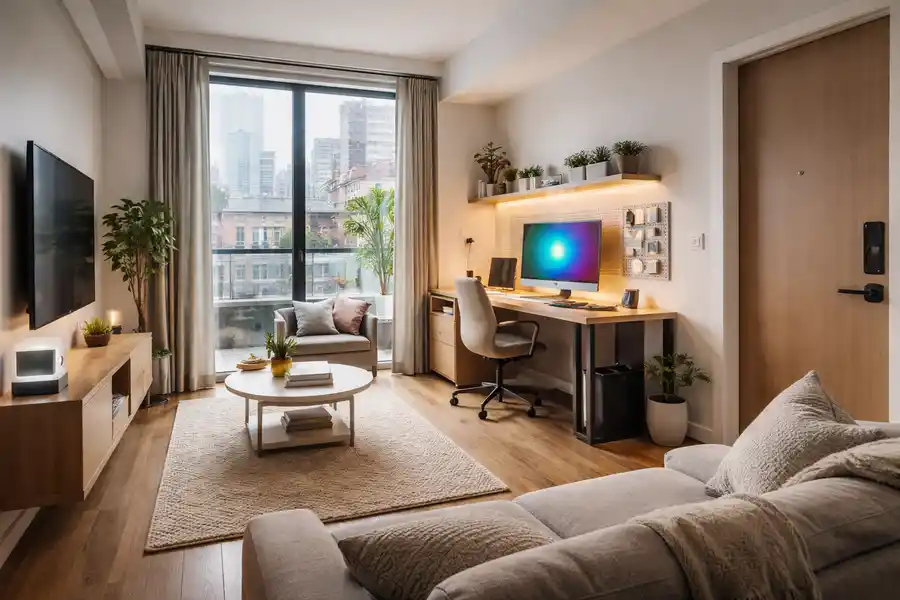
Living in a 400-square-foot studio in New York City or a compact apartment in San Francisco used to mean choosing between comfort and clutter. In 2026, finding the best smart home devices for small spaces is no longer a luxury but a necessity for urban efficiency. As urban living spaces shrink and rent stays high, the demand for smart home devices for small spaces has skyrocketed, transforming technology from a luxury into a mechanical necessity for space optimization.
The year 2026 marks a turning point where compact smart home gadgets are no longer just smaller versions of standard appliances; they are “sentient” tools designed to disappear into your decor while maximizing every inch of your floor plan. Whether you are a digital nomad, a minimalist, or a renter looking for damage-free upgrades, this guide explores how the best smart devices 2026 can turn your tiny home into a high-performance sanctuary. We aren’t just talking about “gadgets”; we are talking about a fundamental shift in how we inhabit our most intimate environments.
While having the right gadgets is essential, their true power is unlocked only when integrated into a broader layout strategy. To understand the principles behind these tech choices, pair this guide with our Ultimate Guide to Space Optimization 2026, where we explore the psychology of vertical living and AI-driven floor plans that make every square foot work twice as hard.
Why Smart Technology is the Secret to “Expanding” Your Square Footage
In a small home, space is the most valuable currency. Traditional gadgets take up room; smart gadgets create it. By 2026, the philosophy of “Muted Tech” has taken over, where the best smart home devices for small spaces are embedded into furniture or walls to reduce visual noise. In a cramped environment, every square inch occupied by a bulky cable or an oversized appliance is an inch taken away from your comfort, making these integrated smart home devices for small spaces a true mechanical necessity.
The Power of Multi-Functionality
In a small home, space is the most valuable currency. Traditional gadgets take up room; smart gadgets create it. By 2026, the philosophy of “Muted Tech” has taken over, where the best smart home devices for small spaces are embedded into furniture or walls to reduce visual noise. In a cramped environment, every square inch occupied by a bulky cable or an oversized appliance is an inch taken away from your comfort, making these integrated smart home devices for small spaces a true mechanical necessity.
Proactive Protection and Peace of Mind
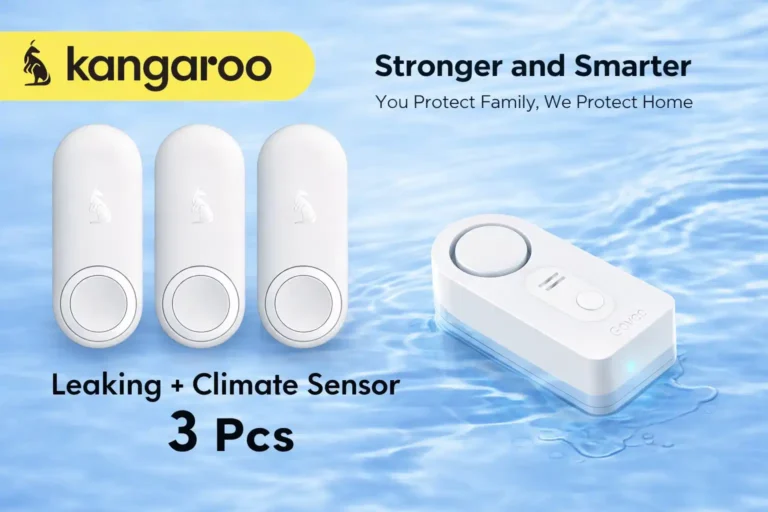
Small spaces amplify risks. A minor water leak in a massive house is a nuisance; a minor leak in a studio is a catastrophe that destroys your bed, your tech, and your floor in minutes. This is why safety sensors are the “invisible” foundation of a smart home. These devices sit silently under sinks or behind washing machines, connected to your phone via the latest low-energy protocols.
Investing in these sensors is the ultimate space-saving hack because it prevents the “clutter” of repair equipment and the stress of property damage.
Essential Smart Home Devices for Small Spaces: Revolutionizing Cleaning
In a small apartment, dust has nowhere to hide, yet there is often no room for a bulky, corded vacuum. The cleaning industry in 2026 has pivoted toward “Vertical Storage” and “High-Efficiency Portability.” When you live in a studio, your cleaning equipment needs to be as agile as your lifestyle.
The Cordless Revolution for Tight Corners
The 2026 trend for cleaning focuses on slim-profile cordless vacuums that offer the power of a full-sized upright without the heavy footprint. These devices are designed to be wall-mounted, turning a cleaning tool into a piece of vertical wall art. This saves floor space in closets that are already packed with clothes and essentials.
The modern cordless vacuum is a testament to how engineering has allowed for massive suction in bodies that weigh less than five pounds. For a small apartment, being able to grab a vacuum from a wall mount and clean the entire unit in under five minutes is the pinnacle of urban efficiency.
Robot Vacuums with Retractable Docks
For those who want zero-effort cleaning, the latest robot vacuums for 2026 feature “ultra-compact” self-emptying bases. These docks are now small enough to fit under a standard bed frame or inside the bottom of a wardrobe, ensuring your floor remains clear of bulky equipment. These robots are now equipped with LiDAR that is specifically tuned for “tight-maneuver” environments, ensuring they don’t get stuck between the narrow legs of designer apartment furniture.
Invisible Security: Protecting Your Rental Without the Drill
Renters make up a huge portion of the small-space market. The “No-Drill Protocol” is the gold standard for 2026. You need security that protects your packages and your privacy without risking your security deposit. When looking for smart home devices for small spaces, security isn’t just about locks; it’s about the “digital eye.” These adhesive-mounted smart home devices for small spaces monitor your doorstep when you are at the office or traveling, providing peace of mind without a single screw.
AI-Powered Doorbell Cameras for Apartments
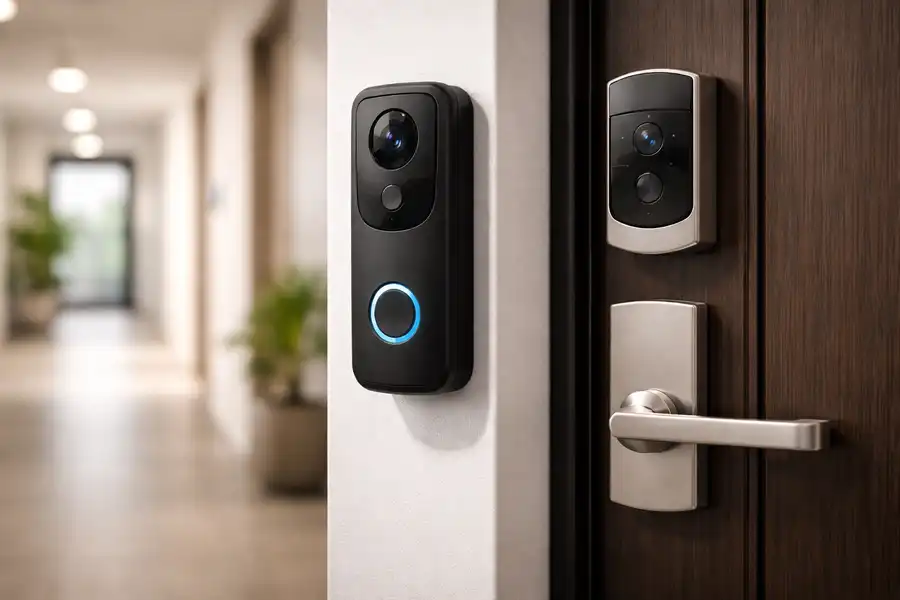
Modern doorbell cameras have moved away from hardwiring. Using high-strength adhesive mounts and long-lasting batteries, you can now have 2K surveillance on your apartment door in under five minutes. In 2026, AI detection has become so advanced that it can distinguish between a neighbor walking their dog in the hallway and a delivery person placing a package at your feet.
The value here for a small space is the “virtual porch.” Even without a front yard, you can manage your deliveries and greet guests from your smartphone, keeping your small entryway clear and secure.
Discreet Internal Monitoring
If you live in a shared space or want to keep an eye on your pets, 2026’s internal cameras are the size of a golf ball. They feature physical privacy shutters that close when you arrive home, ensuring your small “sanctuary” remains private. These cameras can be tucked into a bookshelf or a pegboard, making them completely invisible to the casual observer.
Lighting is the most effective way to make a room feel larger without moving a single wall. By 2026, smart lighting has moved beyond “changing colors” to “shaping environments.” In a windowless studio or a basement apartment, light is the primary factor in mental well-being.
Smart Lighting: The Illusion of Space
Layered Lighting for Zone Definition
In a one-room studio, lighting helps you mentally separate your “office” from your “bedroom.” Smart LED strips—some of the most effective smart home devices for small spaces—placed behind a monitor or under kitchen cabinets create a sense of depth. By using these smart home devices for small spaces to implement “Zonal Lighting,” you can make the rest of the room go dark while you focus on one area, effectively making the walls “disappear” and focusing your attention on the task at hand.
This strategy is essential for anyone who works and sleeps in the same room; it provides the psychological “reset” needed to switch from work mode to relaxation mode.
Circadian Rhythm Integration
Small apartments often lack sufficient natural light. Smart bulbs in 2026 automatically shift from cool “blue” light in the morning to warm “amber” in the evening, mimicking the sun and preventing that “boxed-in” feeling that often leads to cabin fever. This technology isn’t just about aesthetics; it’s about health. Proper light exposure in a compact space can regulate your sleep cycle and improve your mood during long winter months.
The Hybrid Era: When Furniture Meets Technology
The biggest growth sector in smart home devices for small spaces is smart furniture. Why buy a desk and a charger and a lamp when you can buy one unit that does it all? In 2026, the home office is the most important “zone” in any small apartment, and it’s where technology and organization finally merge.
Sentient Desks and Workspace Optimization
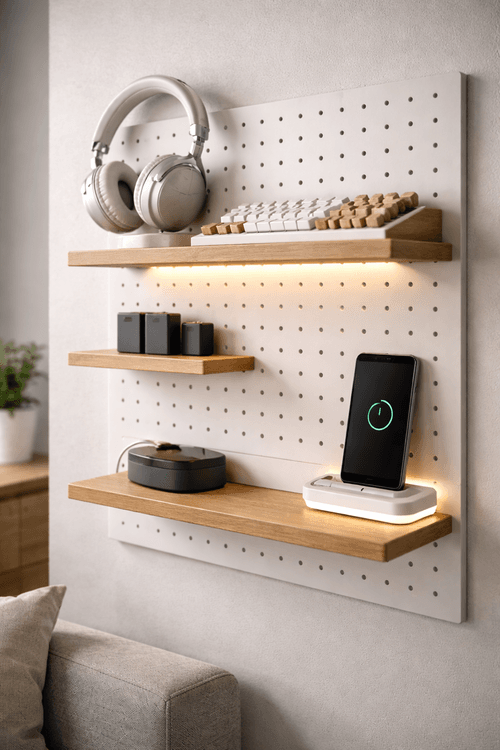
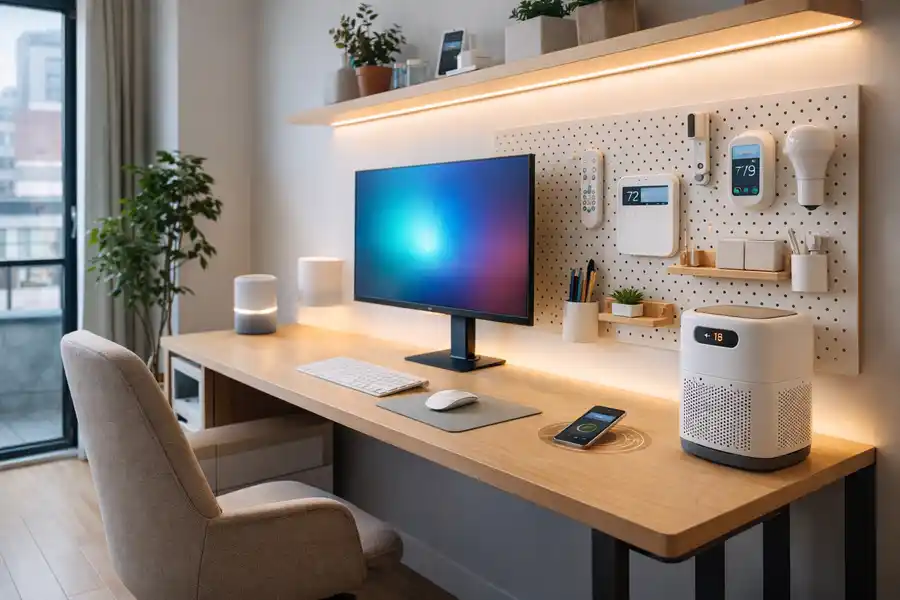
For the digital entrepreneur, the desk is the heart of the home. Modern desk setups in 2026 utilize pegboards not just for storage, but as integrated tech hubs. By moving your hardware onto a vertical plane, you reclaim 40% of your horizontal surface area.
A “sentient” desk in 2026 might include built-in cable management, integrated USB-C hubs, and wireless charging surfaces embedded directly into the wood. This eliminates the “cable spaghetti” that makes small rooms look cluttered and messy.
Smart Beds and Hidden Hubs
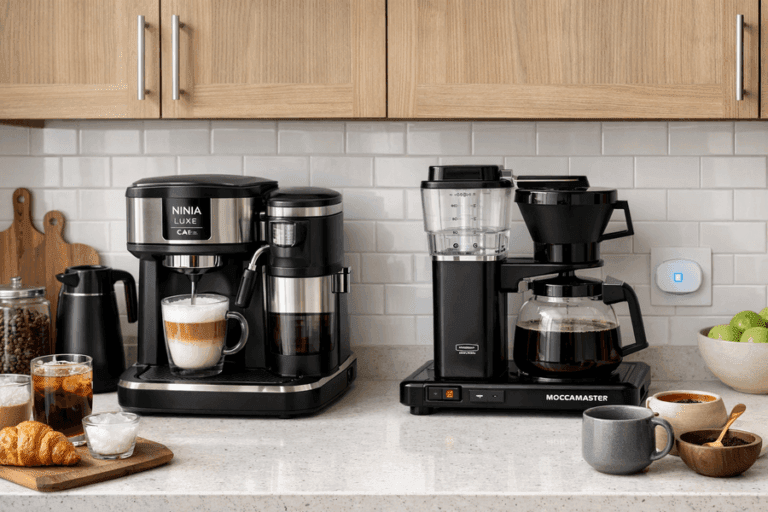
From beds that monitor your sleep quality and adjust temperature to coffee tables with built-in refrigerators and wireless charging surfaces, hybrid furniture is the ultimate ‘space-saving smart device’ hack for 2026. These pieces allow you to have the luxuries of a large home—like a dedicated guest bed or a wine cooler—without needing a separate room for them. For many, this luxury begins with a high-tech morning; check out our guide on Smart Coffee Station Automation: 2 Ultimate Ways to Build Your Luxury Brew, where we show you how to integrate a premium coffee experience into even the most compact hybrid layouts.
Choosing the Right Ecosystem: Matter and Thread in 2026
In the past, having too many gadgets would slow down your Wi-Fi—a nightmare for anyone working from a small apartment. In 2026, the Matter and Thread standards have solved this for all smart home devices for small spaces. These protocols act as the “language” that allows your smart home devices for small spaces to talk to each other without clogging up your internet bandwidth, ensuring a seamless and fast connection even in a tech-heavy studio.
- Matter: Ensures that your Govee sensors talk to your Amazon Alexa and your Apple HomeKit seamlessly. No more “walled gardens”; everything just works together.
- Thread: A low-power mesh network that doesn’t rely on your Wi-Fi router for every single command. This means that even if your internet goes down, your smart lights and security sensors will still function locally. For a small apartment, this reliability is crucial.
Detailed FAQ: Mastering Your Compact Smart Home
1. Can a smart home really save me money in a small apartment?
Absolutely. While the upfront cost of compact smart home gadgets can be higher, the long-term ROI is significant. Smart thermostats can reduce heating and cooling bills by up to 25% by learning your schedule. In a small space, temperature changes happen quickly; automation ensures you aren’t paying to cool an empty room while you’re at the gym.
2. What is the single most important device for a renter in a city?
A smart leak detector. In an apartment building, you aren’t just responsible for your own plumbing; you’re at risk from the units above and below you. A $35 sensor can save you thousands in furniture replacement and security deposit disputes. It is the definition of “small tech, big impact.
3. Will having 30+ smart devices slow down my 4K streaming?
Not in 2026. Thanks to the Thread protocol, smart devices create their own internal “mesh” network. This leaves your primary Wi-Fi bandwidth entirely free for high-demand tasks like Zoom calls, gaming, and streaming. Your smart bulbs won’t compete with your Netflix account anymore.
4. How do I prevent my small space from looking like a tech lab?
Focus on “Muted” or “Integrated” technology. Instead of standalone gadgets, look for smart bulbs that fit your designer lamps. Choose sensors that are the same color as your walls. The goal of a 2026 smart home is to be “ambient”—it should respond to your needs without shouting for your attention.
5. Are budget devices from platforms like Temu reliable for security?
The hardware quality of budget devices has improved drastically by 2026. The real key is the “Ecosystem.” As long as a budget camera or doorbell is Matter-compatible, you can use it with a secure, high-end app like Apple Home or Google Home, giving you premium security features on a budget.
The Future Outlook: What’s Next for Haliskay?
As we look toward the latter half of 2026, the focus for Haliskay will be on deeper AI integration. We are moving away from smart home devices for small spaces that simply wait for your voice command and moving toward “Intuitive Homes” that anticipate your needs based on your habits. In a compact studio, this means your smart home devices for small spaces will learn to adjust lighting and temperature automatically as you move from your desk to your bed, making every square foot work harder for you.
- Coming Soon: Detailed guides on Smart Kitchens for Tiny Homes—how to cook like a chef in 20 square feet.
- Future Review: The Top 5 AI-Powered Air Purifiers for Studio Apartments—because air quality is the ultimate luxury in a small space.
- Project Update: We are testing new Smart Closet Systems that use RFID to help you catalog and organize your wardrobe.
💡 Smart Shopper’s Tip:
Building a high-tech home doesn’t have to break the bank. We’ve found that the best way to source smart home devices for small spaces at a fraction of the cost is by using specialized shopping apps. If you’re looking for the latest $100 coupon bundles or hidden Amazon warehouse deals, check out our dedicated guide: [The Ultimate Guide to Smart Shopping: Mastering Temu and Amazon Deals for Your Home].
Final Thoughts: Small Space, Big Intelligence
Building a smart home in a small space isn’t about buying every gadget on the market; it’s about strategic selection. By choosing best smart home devices for small spaces that are renter-friendly, multi-functional, and energy-efficient, you aren’t just “upgrading” your apartment—you’re expanding your lifestyle.
In 2026, your home should work for you, not the other way around. Start with a solid foundation—security and safety—then move into cleaning and atmosphere. Your 400 square feet has the potential to feel like a high-tech mansion if the “brain” behind it is smart enough. Remember, in a world of shrinking spaces, intelligence is the only thing that doesn’t take up room.
Choosing the right gadgets is only half the battle; knowing how to integrate them into a seamless daily routine is what creates a true sanctuary. For a deep dive into the habits, design layouts, and AI strategies that define modern living, explore our [Ultimate Small Space Lifestyle Guide 2026: Mastering AI Tech and Modern Comfort] to complete your home transformation.
In conclusion, investing in the right smart home devices for small spaces will transform your 400-square-foot apartment into a high-performance sanctuary.
Ready to start your journey? Explore our top-rated INSE Cordless Vacuum Review or secure your entryway with our Smart Video Doorbell Guide today!